

Britain borrowed £18.3 billion in August, £2.9 billion more than a year earlier and £3.5 billion above the OBR forecast. In cash terms, it was the second-highest August borrowing on record, behind only August 2020 during the pandemic.
But the monthly borrowing number only tells part of the story. The government is collecting substantially more money than it was a year ago, while expenditure has increased even faster and is now running materially ahead of the official forecast.
The Government Is Collecting More
During the first five months of this financial year, central government current receipts reached £460.7 billion, up £23.6 billion on the same period last year.
Most of that additional revenue came from taxes and National Insurance:
Taxes: £347.1bn, up £19.8bn
National Insurance contributions: £82.9bn, up £3.0bn
Other government income: £30.8bn, up £0.9bn
Put taxes and National Insurance together and the government collected around £22.8 billion more from those sources in just five months. Income-related taxes were up £8.1 billion, Corporation Tax increased by £4.2 billion and VAT brought in another £3.8 billion.
The ONS technically records National Insurance as a compulsory social contribution rather than a tax, but for households and businesses it remains a compulsory payment linked to employment. For the public finances, the important point is that government revenues are not falling short of expectations.
In fact, central government receipts are currently £1.1 billion higher than the OBR forecast.
Spending Is £7.4 Billion Above Forecast
Now look at the other side of the ledger.
Central government expenditure reached £546.3 billion between April and August, compared with £520.8 billion during the same five months last year. That means spending has increased by £25.6 billion in just five months, or 4.9%.
The comparison with the OBR forecast is even more revealing. By this point in the year, the OBR expected central government expenditure of £539.0 billion.
Actual expenditure is £546.3 billion.
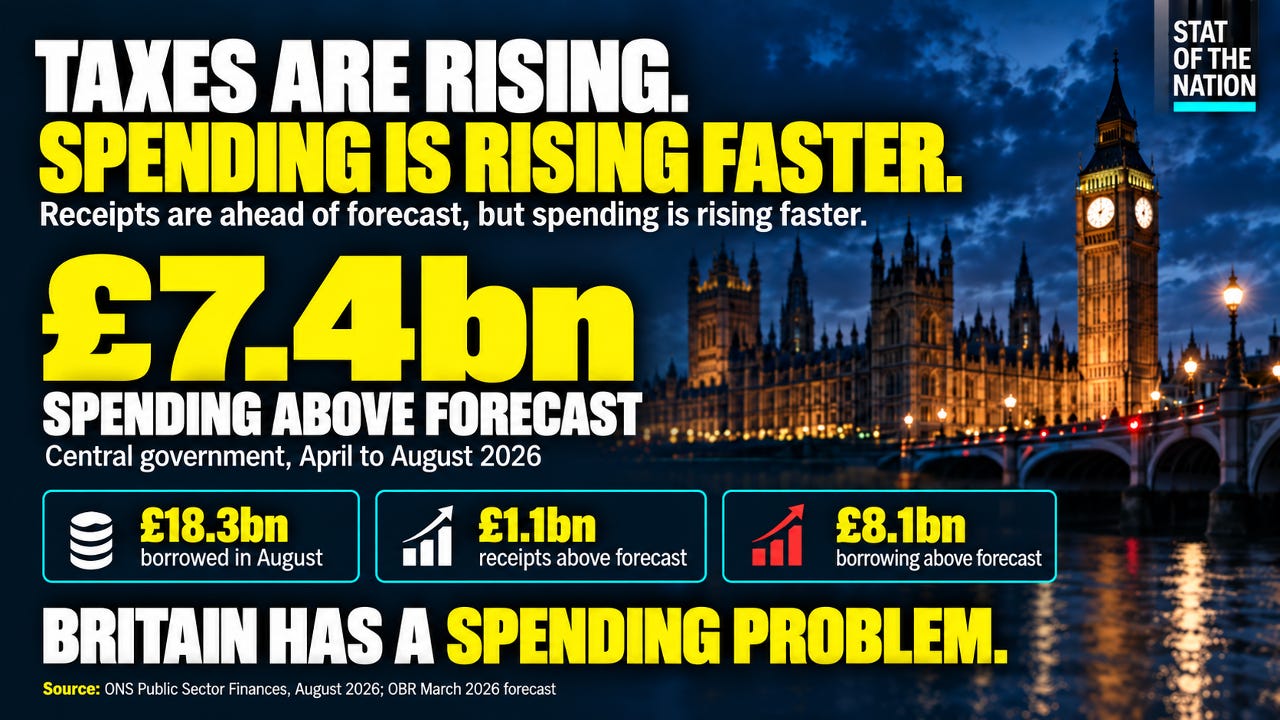
That leaves spending £7.4 billion above forecast after only five months. At the same time, receipts have come in £1.1 billion above forecast.
So the clearest comparison in the entire release is:
Receipts: £1.1bn ABOVE forecast
Spending: £7.4bn ABOVE forecast
The OBR was already forecasting public spending to remain historically high, with total spending expected to be around 45% of GDP in the near term and still above its pre-pandemic share at the end of the forecast.
Yet the latest outturn shows expenditure running ahead of even that planned path.
Where Is the Extra Money Going?
The £25.6 billion increase in spending compared with the same period last year is spread across several major areas.
Social benefits: £145.0bn, up £9.7bn
Goods and services: £196.2bn, up £7.1bn
Net investment: £41.1bn, up £4.2bn
Transfers to local government: £69.1bn, up £2.0bn
Debt interest: £50.0bn, up £0.7bn
The largest increase among these major categories is social benefits, which have risen by £9.7 billion in only five months. Benefits spending is also £2.4 billion above the OBR forecast for this stage of the financial year.
Government spending on goods and services has risen by another £7.1 billion. This category includes departmental pay and the everyday costs of delivering public services, both of which the ONS notes are affected by inflation.
Net investment is also £4.2 billion higher, while transfers to local government have increased by £2.0 billion. The picture is therefore not one isolated spending line running high, but increases across several large parts of the government budget.
£50 Billion Already Spent on Debt Interest
Then there is the cost of servicing Britain’s existing debt.
Central government debt interest reached £8.8 billion in August alone, the highest August figure since monthly records began in 1997, in cash terms. Of that, £2.1 billion reflected the inflation-linked uplift on index-linked government debt.
Across the first five months of this financial year, debt interest has already cost £50 billion. That is slightly higher than last year, but more importantly it is £2.0 billion above the OBR forecast for this point in the year.
These costs matter because debt interest absorbs revenue before government makes choices about public services, investment or taxes. With the national debt still close to £3 trillion, even relatively small changes in inflation and interest costs can translate into billions of pounds.
Borrowing Is Lower Than Last Year, But Well Above Forecast
There is an important qualification in these figures.
Between April and August, Britain borrowed £77.3 billion, which is actually £2.2 billion less than during the same period last year. So borrowing has improved year-on-year.
The problem is the scale of that improvement compared with what had been expected.
The OBR forecast borrowing of £69.2 billion by this point. Instead, borrowing has reached £77.3 billion, leaving the public finances £8.1 billion above forecast after just five months.
Central government borrowing accounts for most of that miss, coming in £6.3 billion above forecast. Public corporations were £2.2 billion worse than forecast, partly offset by local government borrowing being around £0.3 billion better than expected.
There was also a significant revision to the previous figures. The ONS increased its estimate of borrowing between April and July by £2.3 billion, from £56.7 billion to £59.0 billion, largely because earlier tax receipts were revised down.
So this is not simply one unusually poor August number. The previous four months have collectively been revised higher as well.
Nearly £3 Trillion of Debt
Public sector net debt stood at £2.986 trillion at the end of August, £78.5 billion higher than a year earlier.
There is better news when measured against the size of the economy. Debt fell from 95.1% to 93.8% of GDP, because nominal GDP increased faster than the cash value of the debt.
That distinction matters. Britain’s debt ratio has improved over the past year, even while the actual amount owed has continued to rise.
But with debt still just short of £3 trillion and £50 billion already spent on interest in five months, the fiscal room available to government remains heavily constrained.
The Pressure Is on Spending
The £18.3 billion borrowed in August will grab the headlines, but it is not the most important number in this release.
The clearer picture is underneath it:
Receipts are £1.1 billion above forecast.
Spending is £7.4 billion above forecast.
Borrowing is £8.1 billion above forecast.
Government revenues are coming in slightly better than expected. Taxes and National Insurance are also generating substantially more than they did a year ago.
Yet central government expenditure is £25.6 billion higher than last year and £7.4 billion above the OBR’s planned path after only five months.
That is the central message from these figures: the immediate pressure on the public finances is not a shortfall in receipts. It is spending running materially ahead of forecast.
✍️ Jamie Jenkins
Stats Jamie | Stats, Facts & Opinions
If you found this analysis useful, please share it and subscribe for more.
📲 Follow me here for more daily updates:
It can’t be an issue as our beloved leader is doing TikTok videos from New York!
Wow, I am assuming that a responsible government would not allow this to continue? If we do continue spending more than we earn what are the implications, ie just carry on, paying more debt interest or is there a crash or worse to face, à la Greece a few years ago?