

Tax businesses more to employ people, then use taxpayers’ money to encourage them to hire. Wouldn’t it make more sense to reduce the cost of employment in the first place?
That was one of the many issues I discussed with Mike Graham this week on the The Mike Graham Show, as we examined the numbers behind the latest economic and political headlines.
🎥 Watch our full discussion below.
💼 Taxing Jobs, Then Subsidising Them
With around one million young people not in employment, education or training, the Milburn Review is proposing payments of £3,000 to encourage businesses to hire eligible youngsters.
Yet Labour has already increased the cost of employing people through higher employer National Insurance contributions and minimum wage increases.
The latest employment figures make uncomfortable reading:
95,000 fewer payroll employees than a year ago.
79,000 fewer in wholesale and retail alone.
Meanwhile, separate figures show public sector employment rising by 33,000 in the year to June.
With artificial intelligence also threatening traditional entry-level jobs, we discussed why Britain needs to rethink its approach to education, apprenticeships and overseas recruitment.
🇬🇧 Blaming Brexit Again
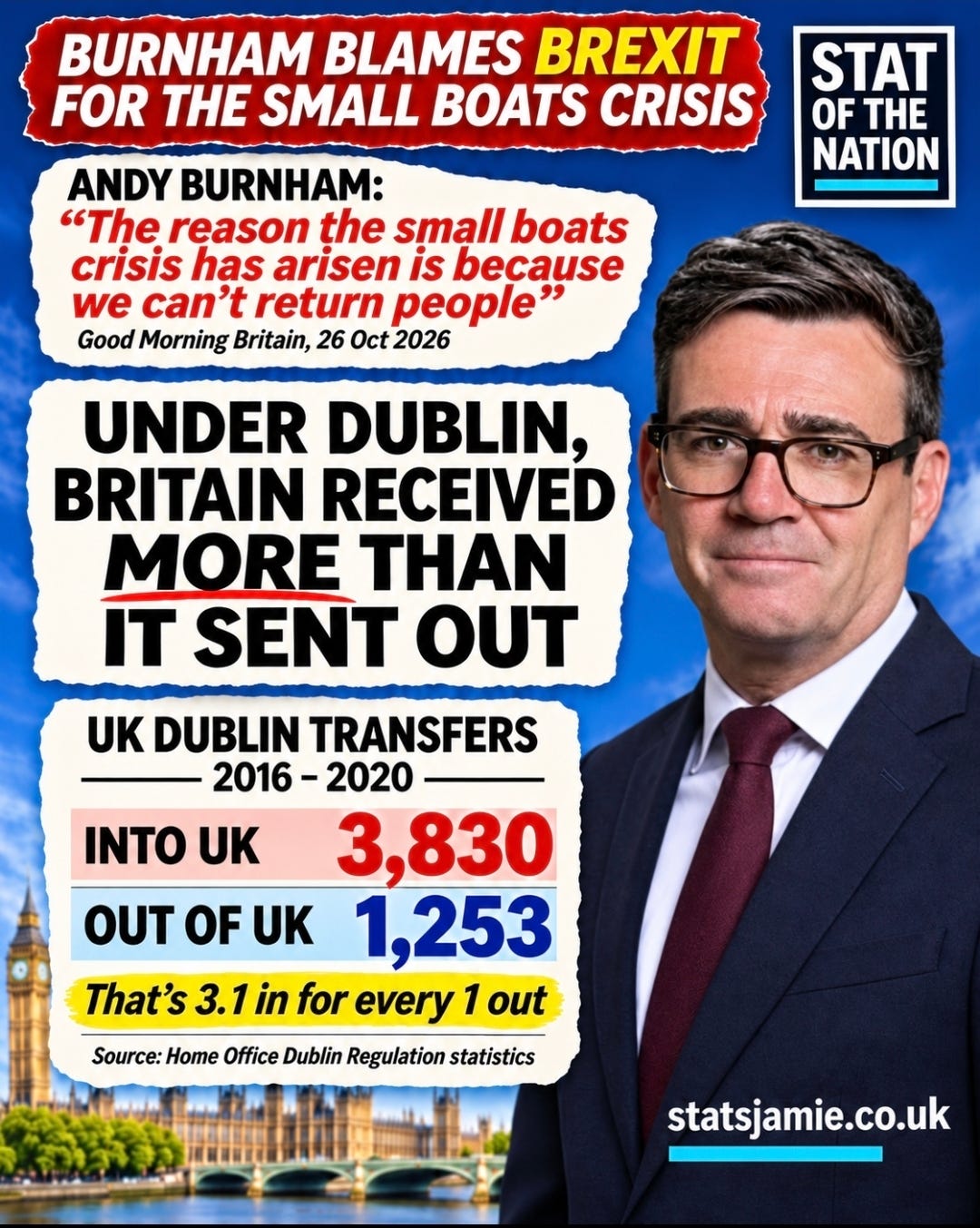
Another week, another attempt to blame Britain’s problems on Brexit.
We discussed Andy Burnham’s claims about exports, the growth in Britain’s services exports and why bananas are relevant to the debate over food exports. Britain imports bananas, some of which have historically been re-exported to Europe.
And on the small boats crisis, between 2016 and 2020, under the EU’s Dublin asylum agreement, Britain received 3,830 people and transferred out just 1,253.
Three people in for every one out.
🏠 Britain’s Rental Crisis
Average UK monthly private rents have reached £1,411 — equivalent to £612 more a year than a year earlier.
Meanwhile, Zoopla reports that there are 25% fewer rental properties available on the market than before the pandemic.
Are successive tax increases, regulation and higher borrowing costs discouraging landlords, leaving tenants to pay the price?
⚡ How Are Families Supposed to Cope?
Inflation has climbed to 3.6%, moving further away from the Bank of England’s 2% target.
With Christmas approaching, families are facing rising rents, food bills and, for some, higher mortgage repayments. As I said to Mike, I genuinely wonder how some people are managing.
If the government really wants to get Britain growing again, it needs to get a grip on the cost of energy. Cheaper energy would benefit virtually every household and business in the country.
✍️ Thanks for reading Stat of the Nation. If you find my analysis useful, please share or subscribe to support my work.
✍️ Jamie Jenkins
Stats Jamie | Stats, Facts & Opinions
📲 Follow me here for more daily updates:
When questioned about the jobs crisis ministers keep quoting that employment is up and unemployment is down so therefore everything is fine.